Phone Number:-+91 9008420075


What Does Leadership Mean When AI Is Changing How Business Gets Done?
AI is rapidly reshaping how organizations operate, compete, and deploy talent. As businesses aggressively adopt AI and automation, teams are becoming leaner, expectations for productivity are rising, and organizations are increasingly relying on technology to get work done.
This raises an important question: When businesses become more dependent on technology and less dependent on people, what kind of leadership do they need?
Perhaps, more than ever, they need leaders who can manage what technology cannot: the human side of business.
AI can analyze data, automate work, and recommend decisions. But it cannot build trust with an anxious team, navigate difficult ethical choices, inspire people through uncertainty, or balance business efficiency with human impact.
As AI becomes more powerful, these distinctly human leadership capabilities become more, not less important. And that means leadership development programs must evolve too.
The Six Competencies Every Modern Program Must Develop
1. Critical Thinking: Asking the Right Questions
In the age of AI, answers are easy to generate. The real leadership edge is knowing which questions to ask.
Modern programs must train leaders to:
- Identify assumptions in AI-generated recommendations
- Break complex business problems into logical parts
- Distinguish between what the data says and what the situation actually needs

Leaders who ask better questions will always outperform leaders who consume better answers.
2. Judgment: Navigating Ethical Gray Zones
AI optimizes for efficiency. It cannot weigh human cost, evaluate reputational risk, or align a decision with organizational values.
Effective judgment training uses crucible scenarios, high-pressure simulations where every option has a downside. Leaders must draw on ethical frameworks, stakeholder empathy, and long-term thinking to make the right call.
3. Human Influence: The Counterweight to Digital Isolation
As workflows become increasingly automated, the relationship between employees and their work risks becoming purely transactional. Leaders must become culture-keepers, motivators, and trust-builders. This is a core focus of an organization’s development program.
Influence in the age of AI is not about authority; it is about authentic connection. Modern programs must develop:
- High emotional intelligence
- Trust-building across hybrid and distributed teams
- The ability to keep people genuinely engaged when daily tasks are heavily automated
The more technology dominates workflows, the more valuable real human leadership becomes.
4. Change Leadership: Managing the Human Side of AI Adoption
AI adoption is not just a technology shift. It triggers fear of obsolescence, status anxiety, and cultural disruption. Leaders need to manage this psychological friction, not just the operational change.
This means learning to:
- Communicate transparently through ambiguity
- Normalize discomfort without dismissing it
- Help employees feel like active participants in change, not victims of it
5. Learning Agility: The Ability to Unlearn
The half-life of professional skills is shrinking. Leaders who rely only on what made them successful in the past will quickly become bottlenecks.
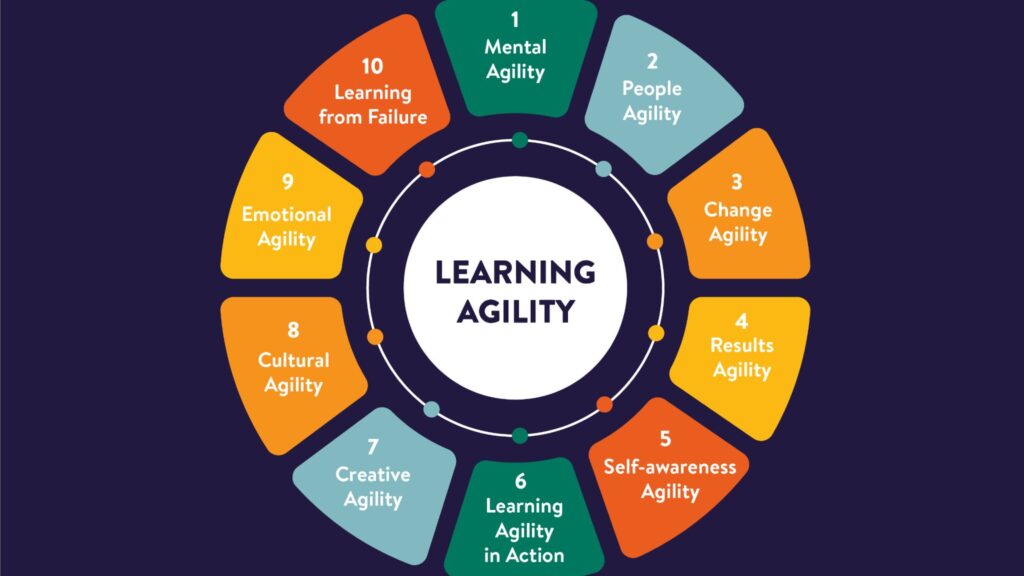
Learning agility is the ability to rapidly adapt, apply lessons from diverse situations, and unlearn outdated habits. Programs must shift from static knowledge delivery toward cognitive flexibility, experimentation, and real-time mental model updates.
6. Executive Presence: Authenticity in a Synthetic World
AI can now draft polished emails, memos, and scripts. Generic, templated leadership communication no longer works; people sense it immediately.
Executive presence today requires:
- Radical authenticity and clarity
- High-stakes storytelling that feels personal and intentional
- The ability to cut through digital noise with a message that is unmistakably human
Final Thoughts
Leadership has always been a deeply human endeavor. What AI is doing is not diminishing that it is clarifying it.
The leaders who stand out will not be those who understand AI best. They will be the ones who understand people best, who can build trust in uncertain times, make difficult calls with incomplete information, and keep teams moving forward when the path is unclear.
The six competencies discussed here are not a checklist. They are a reflection of what leadership has always required at its core and what the age of AI is now making impossible to ignore.
At PrimeCrest Alliance, leadership development programs are built around exactly these competencies, helping professionals develop the human edge that matters most right now.
We would love to hear from you. What leadership qualities are becoming more critical in your organization as AI grows? Are the programs around you keeping pace, or is there still a gap? Share your thoughts in the comments below.